
Choosing from the best web hosting providers is not about finding the cheapest plan or the company with the loudest marketing. It is about finding hosting that keeps your website online, loads pages quickly, protects your data, and gives you room to grow without forcing a painful migration later.
A personal blog, local business website, affiliate site, online store, and high-traffic WordPress publication all need different levels of hosting. The good news is that you do not need to understand every server setting before choosing. You only need to know what matters, what to ignore, and which host fits your website type.
This guide compares six strong hosting providers for different users: Hostinger, Cloudways, Kinsta, WP Engine, SiteGround, and DreamHost.
Why do websites need better hosting than basic shared plans?
Basic shared hosting can be enough for a new blog, portfolio, or small brochure website. But problems start when your site gets more visitors, uses larger images, runs WooCommerce, relies on many plugins, or publishes regular content.
A weak hosting plan can lead to slow pages, server errors, downtime, poor WordPress performance, failed backups, and frustrating support tickets. These issues can affect visitor trust, lead generation, online sales, and search visibility.
Better hosting does not always mean the most expensive hosting. It means choosing a plan with the right amount of storage, server resources, backups, caching, security, and support for your current stage.
For example, a beginner may be better off with managed shared hosting. A growing WordPress site may need cloud hosting. A busy ecommerce store may need managed WordPress hosting with stronger resources and staging tools.
Pro Tip: Do not buy a VPS just because it sounds more powerful. Most beginners will get better results from a quality managed hosting plan with backups, caching, and support.
Choose hosting that protects your website, visitors, and revenue
A hosting provider should do more than store website files. It should help protect your site from downtime, security issues, slow loading speeds, and data loss.
Before choosing a host, look for these essentials:
- Free SSL certificates
- Automatic backups
- Malware protection or security monitoring
- One-click WordPress installation
- Staging tools for testing changes
- CDN support
- Server-level caching
- Easy website migration
- Reliable customer support
- Clear renewal pricing
- Upgrade options for traffic growth
Managed WordPress hosting is useful because the provider handles more technical work, such as security patches, backups, caching, and server maintenance. This can save time for business owners who want to focus on content, marketing, products, or customers instead of server administration.
For a small website, you may not need every advanced feature on day one. However, SSL, backups, support, and an easy upgrade path should never be optional.
Understand the technical specs before you buy
You do not need to become a server administrator, but you should understand a few important hosting terms before paying for a plan.
NVMe SSD vs standard SSD: why storage speed matters
Storage affects how quickly your hosting server can read WordPress files, images, plugin data, and database information.
Traditional HDD storage is slower and is no longer a good choice for modern WordPress websites. Standard SSD storage is much faster, while NVMe SSD storage is generally faster again because it uses a more direct connection to the server.
NVMe storage is especially useful for websites with many images, large databases, WooCommerce products, page builders, membership plugins, or high content volume.
Hostinger currently includes NVMe storage on many of its hosting plans, while DreamHost also lists NVMe storage on several shared and managed WordPress plans.
Pro Tip: Storage speed helps, but it will not fix a website that uses huge uncompressed images, a heavy page builder, or too many poorly coded plugins.
LiteSpeed vs Nginx vs Apache: which server is better?
LiteSpeed, Nginx, and Apache are web server technologies. They help deliver website files to visitors.
Apache is widely supported and flexible. Nginx is well known for handling high traffic efficiently. WordPress itself recommends Apache or Nginx as robust options for running WordPress, although WordPress can run on any server that supports PHP and MySQL.
LiteSpeed is popular with WordPress users because it works with LiteSpeed Cache, which can provide server-level caching and performance tools. LiteSpeed also supports modern protocols such as HTTP/3.
There is no universal winner.
LiteSpeed is often a strong choice for beginners who want easy WordPress caching. Nginx is common on premium managed WordPress platforms. Apache remains reliable and widely compatible.
The better question is whether the host provides good caching, updated PHP versions, CDN support, and enough server resources for your site.
RAM and CPU cores: what do they actually do?
CPU and RAM affect how many tasks your hosting server can handle at the same time.
CPU handles processing work. For example, it helps load WordPress pages, run plugins, process WooCommerce orders, and perform database requests.
RAM helps the server keep active processes running smoothly. More RAM is useful when you have more visitors, complex plugins, page builders, large stores, membership areas, or resource-heavy themes.
A small blog does not need huge CPU or RAM allocations. But a growing business site or ecommerce store can quickly outgrow a cheap shared plan.
Cloudways allows users to scale server resources, including RAM, CPU, and storage, as websites grow.
Pro Tip: If your website becomes slow only during traffic spikes, sales promotions, or busy hours, limited CPU or RAM may be part of the problem.
Data center locations and latency: why distance matters
A data center is the physical location where your website server runs. The farther the server is from your visitor, the longer it can take for data to travel.
If most of your visitors are in the United States, choose a US data center when possible. If your audience is in Europe, Asia, India, or Australia, choose the closest suitable location.
A CDN can help deliver static files such as images, CSS, JavaScript, and fonts from locations closer to your visitors. But the main server location still matters, especially for dynamic WordPress pages, WooCommerce checkouts, account areas, and search functions.
Kinsta offers a global network of data centers for managed WordPress hosting, while SiteGround’s cloud hosting also uses data center locations across the US, Europe, Asia, and Australia.
The 6 best web hosting providers
1. Hostinger: best overall for beginners and growing websites
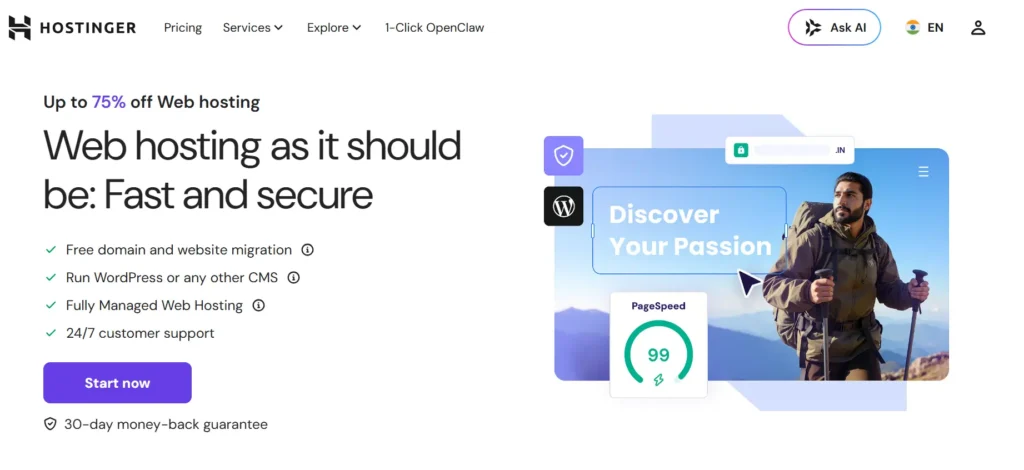
Hostinger is a practical choice for beginners, bloggers, affiliate marketers, small businesses, and WordPress users who want affordable hosting without a complicated dashboard.
Its hosting plans include managed hosting features, LiteSpeed technology, NVMe storage, one-click WordPress installation, free SSL certificates, and an upgrade path to cloud hosting or VPS plans.
The main advantage is simplicity. Hostinger’s hPanel is easier for many beginners than traditional cPanel dashboards. You can manage domains, websites, backups, WordPress, email, SSL, and security settings from one place.
Hostinger is best for:
- New WordPress websites
- Affiliate blogs
- Personal portfolios
- Local business websites
- Small ecommerce stores
- Users who want lower upfront costs
- Beginners who need simple hosting tools
The main limitation is that very large stores, advanced membership platforms, and high-traffic publishers may eventually need cloud hosting or a premium managed WordPress provider.
2. Cloudways: best for growing sites that need scalable cloud power
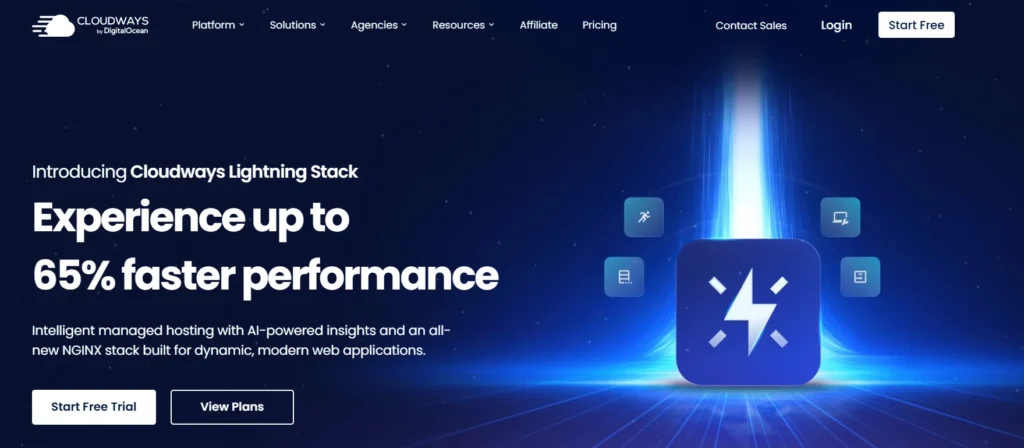
Cloudways is a managed cloud hosting platform for WordPress, WooCommerce, Magento, Laravel, PHP applications, and growing business websites.
It is a strong choice for users who want more server control and scalability than shared hosting but do not want to manage a raw VPS or cloud server themselves.
Cloudways supports vertical scaling, one-click application deployment, multiple PHP versions, staging tools, server-level controls, and managed cloud infrastructure.
Cloudways is best for:
- Growing WordPress websites
- WooCommerce stores
- Agencies managing client sites
- High-traffic content websites
- Developers who need staging and server controls
- Businesses that need flexible cloud resources
The main downside is that Cloudways can feel more technical than Hostinger or SiteGround. It is still easier than self-managed cloud hosting, but beginners may need time to understand servers, applications, backups, and scaling.
3. Kinsta: best premium managed WordPress hosting for serious businesses
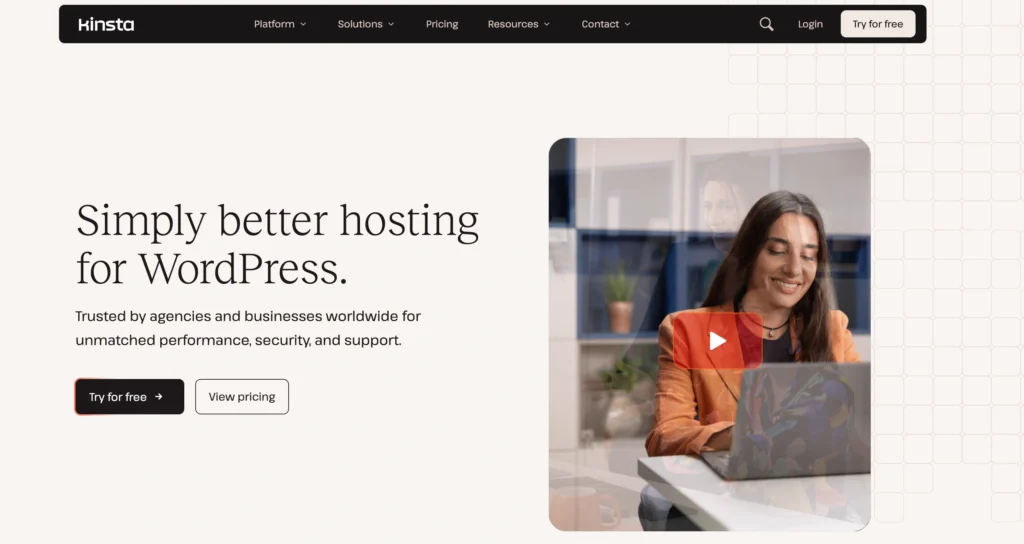
Kinsta is a premium managed WordPress hosting provider built for businesses, agencies, publishers, ecommerce stores, and WordPress sites where performance and support matter more than the lowest price.
Kinsta includes managed security, backups, staging environments, expert support, SSL, DDoS protection, malware removal, multi-user access, and migration tools.
It is especially useful for websites that need a polished WordPress-specific dashboard and reliable performance without managing server settings.
Kinsta is best for:
- High-value WordPress websites
- Ecommerce stores
- Agencies
- Publishers with strong traffic
- Membership websites
- Businesses that need staging and developer tools
- Teams managing multiple WordPress sites
The biggest drawback is price. Kinsta is not built for someone launching a basic personal blog on a tight budget.
4. WP Engine: best for established WordPress businesses and agencies
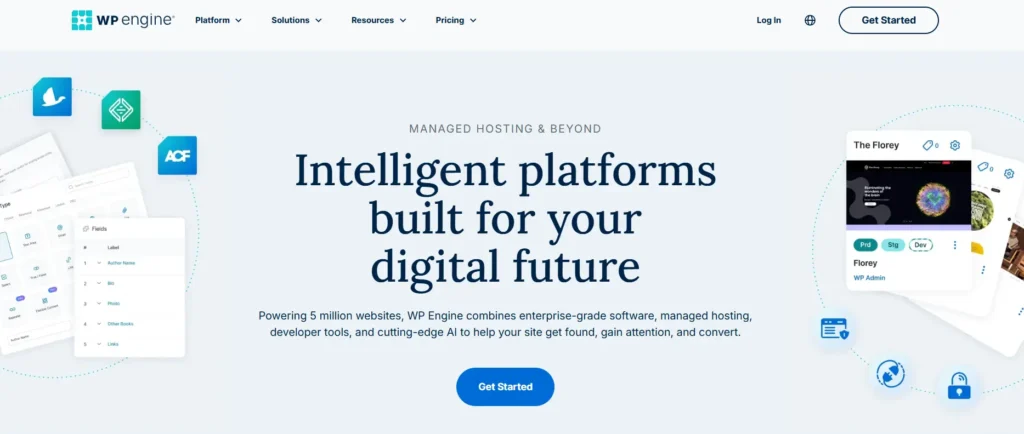
WP Engine is another premium managed WordPress hosting platform aimed at established companies, agencies, ecommerce businesses, and mission-critical WordPress websites.
Its managed plans focus on automatic updates, proactive security, developer tools, migration support, backups, performance features, and expert WordPress support.
Higher-tier WP Engine plans include isolated resources, uptime commitments, advanced monitoring, support options, and additional performance tools for companies with serious hosting requirements.
WP Engine is best for:
- Agencies with client websites
- Growing ecommerce stores
- Large WordPress businesses
- Marketing teams
- High-traffic company websites
- Teams that need staging and workflow tools
- Users who want managed WordPress support
WP Engine is not the cheapest option. It is better suited to websites where downtime, slow performance, and technical issues would cost more than premium hosting.
5. SiteGround: best for support-focused WordPress users
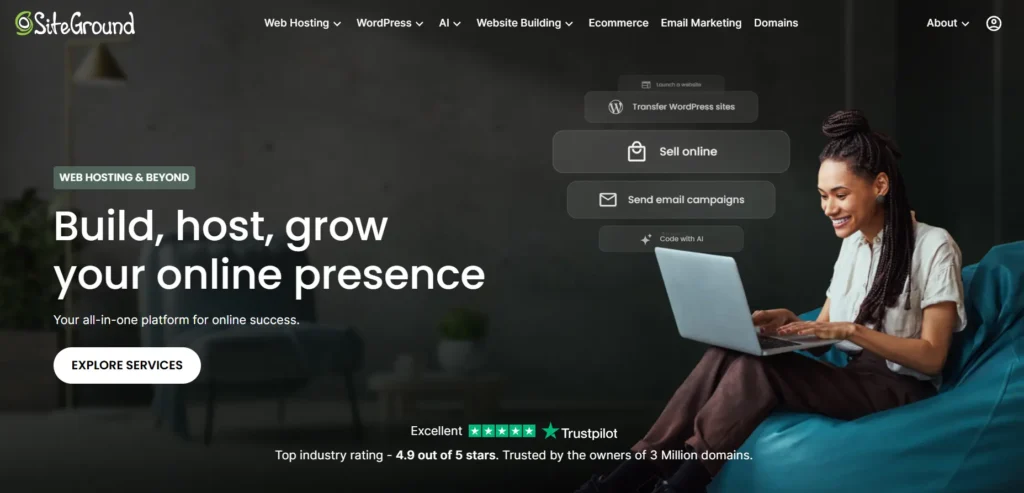
SiteGround is a good choice for WordPress users who want managed features, strong support, built-in caching, staging tools, backups, security tools, and a simple setup process.
Its WordPress hosting includes one-click setup, automated transfer options, caching, CDN features, automatic updates, WordPress-focused tools, and 24/7 support.
SiteGround is often a good middle-ground option. It is easier than Cloudways, usually more feature-rich than basic shared hosting, and less expensive than premium managed WordPress hosts such as Kinsta or WP Engine.
SiteGround is best for:
- WordPress business websites
- Bloggers who need stronger support
- Freelancers
- Agencies with smaller client sites
- WooCommerce beginners
- Users who want staging and backup tools
- Website owners who prefer managed features
The main thing to check is the renewal price. Introductory offers can be attractive, but long-term costs should be reviewed before buying.
6. DreamHost: best simple hosting for content-heavy beginners
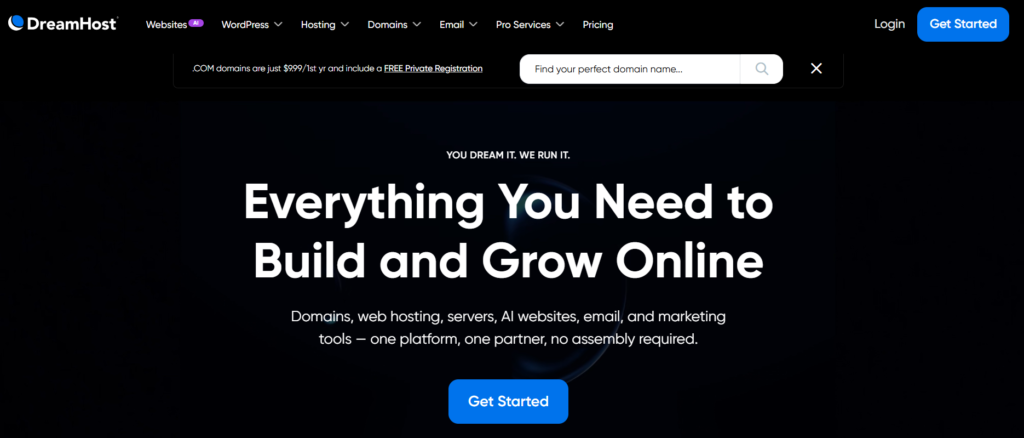
DreamHost is a solid choice for bloggers, content websites, small businesses, and WordPress users who want a simple hosting platform with straightforward features.
Its WordPress hosting includes free SSL, email account tools, domain management, one-click WordPress installation, and 24/7 support. DreamHost also offers managed WordPress plans with backups, staging, CDN features, migration support, and WordPress-focused assistance.
DreamHost is best for:
- New blogs
- Content-heavy websites
- Writers and publishers
- Portfolio websites
- Small business sites
- Users who want simple WordPress tools
- Website owners who prefer a straightforward control panel
DreamHost is not the best choice for every advanced website. Large WooCommerce stores and high-traffic businesses may benefit more from Cloudways, Kinsta, or WP Engine.
Compare the best web hosting options quickly
| Hosting Provider | Best For | Hosting Type | Ease of Use | Performance Level | Price Level |
|---|---|---|---|---|---|
| Hostinger | Beginners and growing websites | Shared, WordPress, cloud, VPS | Very easy | Good | Budget |
| Cloudways | Scalable WordPress and ecommerce sites | Managed cloud hosting | Moderate | Very good | Mid-range |
| Kinsta | Premium WordPress businesses | Managed WordPress | Easy | Excellent | Premium |
| WP Engine | Agencies and established brands | Managed WordPress | Easy | Excellent | Premium |
| SiteGround | Support-focused WordPress users | Managed WordPress and cloud | Easy | Very good | Mid-range |
| DreamHost | Blogs and content websites | Shared and managed WordPress | Easy | Good | Budget to mid-range |
Prices, included resources, promotional discounts, and renewal rates change regularly. Always review the exact plan details before checkout.
Use this expert checklist before you pay
Before purchasing hosting, ask these questions:
- Does the plan support your website platform?
- Does it include free SSL certificates?
- How often are backups created?
- Can you restore backups yourself?
- Does it include email hosting?
- Is storage NVMe or SSD?
- Does the host provide caching tools?
- Can you choose a nearby data center?
- Does it include a CDN or support Cloudflare?
- Are staging sites available?
- What happens when traffic grows?
- Can you upgrade without moving your website?
- Does the host provide migration support?
- What is the renewal cost after the introductory term?
- Is customer support available when you need it?
- Are your WordPress themes and plugins compatible?
Pro Tip: Do not pay for advanced resources before you need them. Start with reliable hosting, then upgrade once your traffic, revenue, or website complexity justifies it.
Final verdict: which host should you choose?
For most beginners, bloggers, affiliate marketers, and small business owners, Hostinger is the best overall starting point. It is easy to manage, includes useful WordPress tools, uses LiteSpeed technology, offers NVMe storage, and gives you several upgrade options as your website grows.
Choose Cloudways when your website needs scalable cloud resources, stronger performance controls, or flexibility for ecommerce and high traffic.
Choose Kinsta when you run a serious WordPress business and want premium managed performance, security, staging, backups, and expert support.
Choose WP Engine when your company or agency needs managed WordPress hosting with advanced workflow, performance, and enterprise-level tools.
Choose SiteGround when you value WordPress-focused support, managed features, backups, caching, and an easy setup.
Choose DreamHost when you want simple hosting for a blog, portfolio, content site, or small business website.
The best hosting provider is not the same for everyone. Choose the one that fits your website today and gives you a clear path for growth tomorrow.
FAQs about the best web hosting providers
1. What is the best web hosting provider for beginners?
Hostinger is a strong choice for beginners because it offers simple website management, WordPress installation, SSL, backups, LiteSpeed technology, and upgrade options at a budget-friendly starting level.
2. Is shared hosting enough for a website?
Shared hosting is enough for personal blogs, portfolios, small business websites, and new WordPress sites. Upgrade to cloud hosting or managed WordPress hosting when traffic, ecommerce activity, plugins, or database usage increases.
3. How much should I spend on web hosting?
A new website can start with budget hosting. Spend more when your website earns revenue, receives steady traffic, runs WooCommerce, handles customer data, or needs stronger backups, staging, support, and security.
4. Does hosting affect SEO rankings?
Hosting does not directly guarantee rankings, but poor hosting can create slow loading times, downtime, broken pages, and security issues that harm user experience. Fast and reliable hosting supports a better technical foundation for SEO.
5. Which is better for WordPress, LiteSpeed or Nginx?
Both can work well. LiteSpeed is useful for WordPress sites that want LiteSpeed Cache and easy server-level caching. Nginx is common on premium managed WordPress platforms and is well suited to high-traffic websites. The host’s caching, resources, CDN, and support matter more than the server name alone.
6. What hosting features matter most?
The most important features are SSL, backups, support, fast storage, caching, enough CPU and RAM, data center locations, CDN support, WordPress tools, easy migration, and a clear upgrade path.